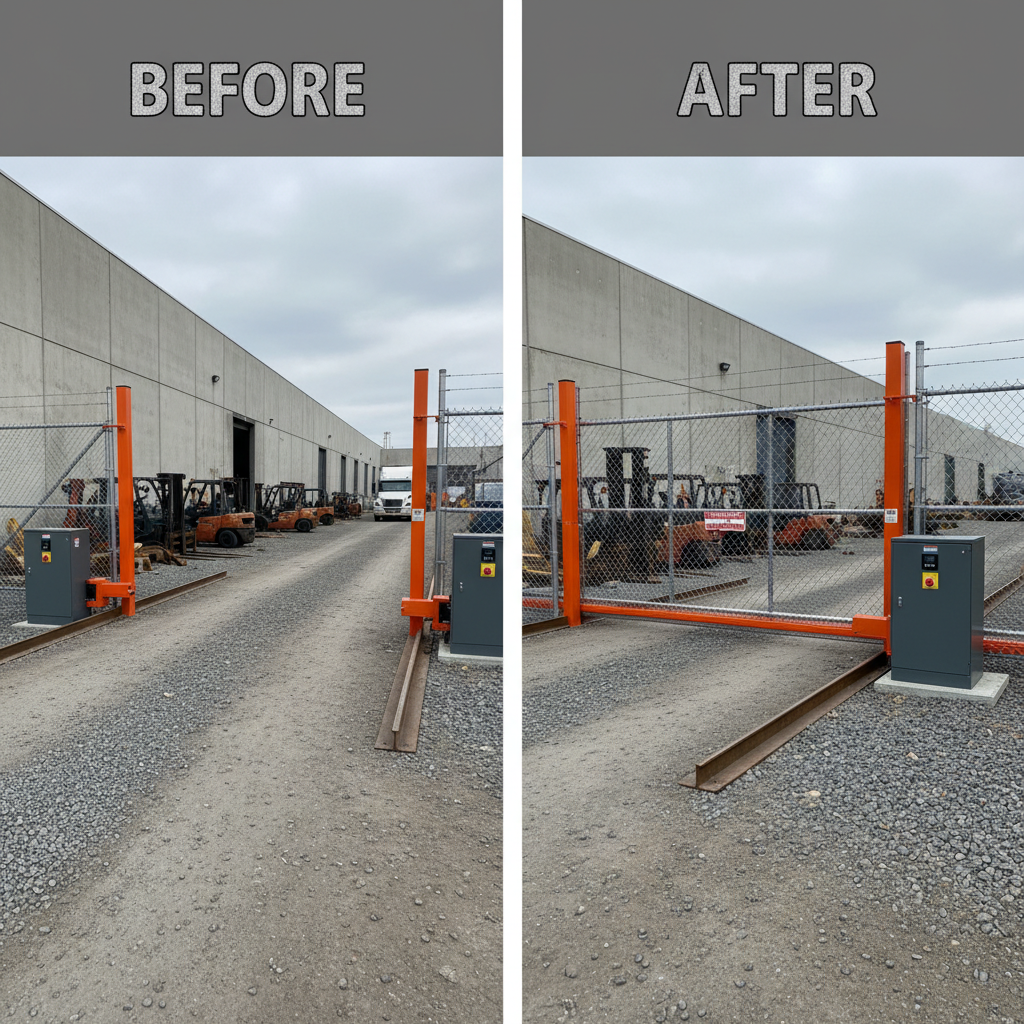
Selecting the right perimeter barrier often involves a complex trade-off between immediate deployability and long-term structural integrity. For projects requiring rapid site enclosure without sacrificing security, the specific configuration of an h and w fence system provides a modular solution that addresses these competing needs.
In high-traffic environments such as construction zones or public events, the ability to modify the perimeter in real-time is critical. The shift toward prefabricated galvanized steel frameworks has allowed operators to reduce installation labor while maintaining compliance with rigorous safety standards, such as the AS/NZS 4380.
This analysis examines the technical specifications, application logic, and selection frameworks necessary to optimize the use of temporary security fencing in industrial and commercial settings.


Modular fencing differs from permanent installations by prioritizing the "lifecycle of the site." An h and w fence utilizes a pre-fabricated panel system that allows for rapid assembly without the need for heavy machinery or permanent concrete footings.
The core engineering revolves around a two-part post system—either drive-in posts for soft ground or base-mounted posts for hard surfaces. This flexibility ensures that the security perimeter can evolve as a project progresses, allowing for the redistribution of barriers to protect new high-risk areas.
The structural durability of these systems is rooted in the use of high-grade galvanized steel. A standard professional configuration typically employs a 42mm outer diameter steel tube with a 1.6mm wall thickness for the framework, providing the necessary rigidity to resist wind loads up to 0.7kPa. The internal mesh is usually comprised of 4mm thick galvanized steel wire, configured in 50mm x 150mm rectangular openings.
Material selection is not merely about strength but also corrosion resistance. Galvanization protects the steel from oxidation in varied climates, from humid coastal regions to intense sunlight. This ensures that the panels remain structurally sound throughout multiple deployment cycles without requiring frequent replacement or costly maintenance.
Precision in manufacturing is critical for the interlocking mechanism. When panels are produced to strict tolerances, they fit securely into the post system, reducing the "play" or rattling that can occur in lower-quality fences. This tight fit is what prevents unauthorized access by minimizing gaps that could be exploited.
One of the primary challenges in site security is balancing the need to keep people out with the need for surveillance. Solid walls provide total privacy but create blind spots that can hide intruders or hazardous activities. The wire-mesh design of an h and w fence solves this by maintaining high transparency.
Visibility acts as a passive security layer; when security personnel can clearly monitor crowd dynamics and site internals, the risk of undetected accidents or unauthorized breaches is significantly reduced.
To enhance this visibility in low-light or high-risk zones, fluorescent coatings are often applied. These colors serve as a visual warning to pedestrians and operators, effectively marking boundaries in disaster recovery zones or temporary traffic management areas where sudden changes in environment can lead to accidents.
Evaluating the efficiency of a fencing system requires looking beyond the material cost to the "total cost of deployment." This includes the time required for installation, the ease of transportation, and the lifespan of the product. A modular system that can be erected by a small team in a few hours provides a significant logistical advantage over traditional methods.
When comparing different fence types, we can use a relative performance index to evaluate how they meet specific industrial requirements. This helps buyers determine if a temporary solution is sufficient or if a permanent security installation is required based on the projected duration of the project.
In a typical industrial setting, such as a mining operation or a large-scale construction project, the perimeter is rarely static. The ability to rapidly disassemble and reassemble an h and w fence means that security can move in tandem with the workforce. For example, as a building's foundation is completed and the focus shifts to the upper floors, the ground-level security needs may change, requiring the fence to be shifted to protect equipment storage areas.
Logistically, the weight of the panels—approximately 28kg per standard 2.1m x 2.4m unit—is designed to be manageable for manual handling while remaining heavy enough to prevent easy displacement by wind or unauthorized attempts to move the barrier. This balance is essential for ensuring that the fence remains a deterrent without requiring specialized lifting equipment for every move.
The industry is moving toward "smart perimeters," where physical barriers are integrated with IoT sensors to detect breaches in real-time. While the physical structure of the h and w fence remains the primary deterrent, the addition of clip-on sensor arrays allows site managers to receive instant alerts on their mobile devices when a panel is disturbed.
Sustainability is also becoming a key driver. The shift toward high-recyclability galvanized steel and the development of more efficient production processes—such as the 500+ panel daily capacity seen in modern facilities—are reducing the carbon footprint of site security. The goal is to create a circular economy where temporary fences are refurbished and reused across dozens of different projects.
Furthermore, we are seeing a demand for increased customization in panel heights. While 2.1m is the standard, requirements for high-security mining or government sites are pushing designs toward 3.0m heights, necessitating reinforced corner joints and heavier-duty frameworks to maintain stability at greater elevations.
Choosing between various fencing options requires a structured evaluation of the environment and the security objective. A user evaluating a short-term event will prioritize installation speed and aesthetic neatness, whereas a mining operator will prioritize wind resistance and physical durability.
The primary trade-off is usually between "Installation Effort" and "Long-term Stability." Permanent security fences offer maximum stability but require significant time and cost to install and remove. Temporary modular systems offer the middle ground, providing professional-grade security with minimal operational friction.
The following table provides a relative suitability framework for different fencing categories based on typical industrial requirements.
| Fence Category | Setup Speed | Security Level | Relative Cost | Best Use Case |
|---|---|---|---|---|
| Temporary Modular | Very High | Moderate-High | Medium | Construction Sites |
| Chain Link | Low | High | Medium-High | Permanent Perimeters |
| Crowd Barrier | Extreme | Low-Moderate | Low | Public Events |
| Livestock Fence | Moderate | Moderate | Low-Medium | Agricultural Zones |
| Tubular Fence | Moderate | Moderate | Medium | Industrial Walkways |
| Permanent Security | Very Low | Extreme | High | High-Value Assets |
A professional modular system is defined by its adherence to international safety standards (such as AS/NZS 4380), the use of galvanized steel for corrosion resistance, and a design that allows for rapid, tool-free or minimal-tool assembly. Key components include pre-fabricated panels with reinforced corner joints and a dual-post system (drive-in or base-mounted) that ensures stability across different terrain types.
Wind load is a critical safety factor. High-wind environments can turn large fence panels into "sails," potentially knocking over the entire perimeter. Professional systems are tested to withstand specific loads (e.g., 0.7kPa). To counter wind, users should choose frameworks with 42mm OD tubes and utilize ground penetration pins or weighted bases to ensure the fence remains upright during storms.
Choose modular panels when the perimeter needs to be flexible or temporary. If the fence must be moved as a project evolves, or if you need to set up and tear down the barrier within hours rather than days, modular systems are far superior. Chain link is better suited for permanent boundaries where the cost of installation is a one-time investment and the barrier will not be moved for several years.
Corrosion is managed through hot-dip galvanization, which creates a protective zinc layer on the steel surface. This prevents rust even when the fence is exposed to heavy rain, salt air in coastal regions, or industrial chemicals. For temporary use, this ensures the structural integrity of the 4mm wire mesh and the main framework remains intact over multiple rental or purchase cycles.
Yes, customization is common for high-risk environments. This includes increasing the panel height (up to 3.0m), using thicker gauge steel for the frame, or adding fluorescent coatings to increase visibility. Additionally, the use of interlocking mechanisms prevents panels from being easily lifted or shifted, which is essential for protecting high-value equipment or restricted disaster zones.
The primary advantages are speed and reduced labor costs. Because panels are pre-welded and standardized, a small team can erect hundreds of meters of fencing in a single day. Furthermore, the modular nature allows for efficient stacking and transportation, reducing the number of vehicle trips required to deliver materials to a remote site or event venue.
The effectiveness of a perimeter security strategy depends on the alignment between the chosen hardware and the operational reality of the site. An h and w fence represents a balanced approach, offering the structural rigor of galvanized steel with the agility of a modular design.
By focusing on material specifications—such as AS/NZS 4380 compliance and corrosion-resistant finishes—operators can ensure that their temporary barriers provide a genuine deterrent while minimizing the long-term cost of ownership and installation labor.