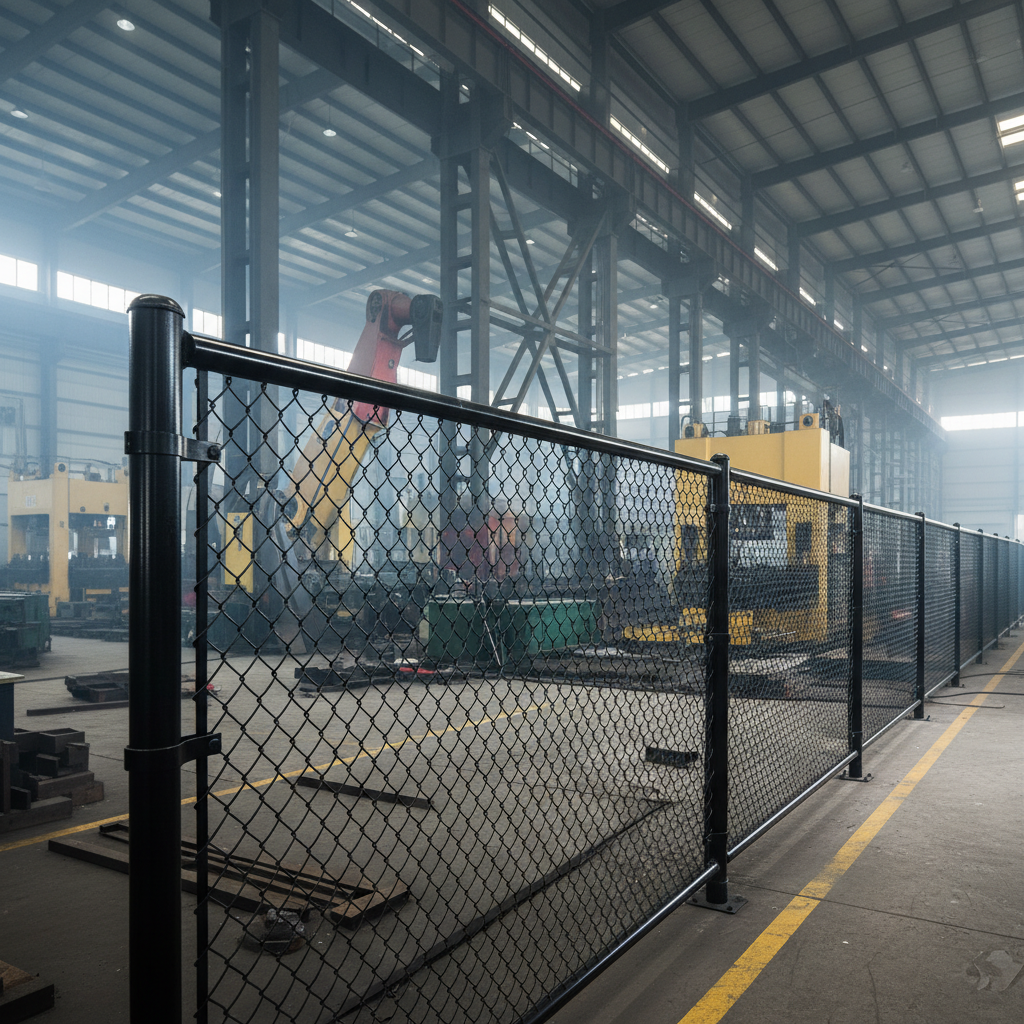
Securing a perimeter is no longer just about creating a physical boundary; it is about neutralizing specific breach methods. Traditional chain link or wooden barriers often fall short when faced with determined intruders who employ cutting tools or utilize the fence's own structure as a ladder.
The shift toward specialized security infrastructure has led to the adoption of high-density mesh and reinforced frameworks designed specifically to resist these tactics. By eliminating footholds and narrowing apertures, these systems force intruders to spend more time and effort to penetrate, significantly increasing the window for detection and response.
For those auditing their current security posture, understanding the technical nuances of anti cut anti climb fencing is essential for selecting a barrier that aligns with the actual risk profile of the site.


Most security failures occur because fences provide "assistance" to the intruder. Standard chain link fences, for example, offer ample toe-holds and can be easily compromised with basic bolt cutters. This creates a vulnerability where the fence acts more as a visual marker than a true deterrent.
To counteract this, security engineering focuses on the "aperture size." By reducing the space between vertical and horizontal wires, the fence becomes impossible to climb without specialized equipment and too tight for hand-held cutting tools to gain a grip on the wires.
The core of an effective anti-climb system lies in its geometry. Unlike traditional weaving, high-security mesh is typically welded at every intersection. This rigidity prevents the mesh from being stretched or pulled apart, which is a common method used to create gaps for entry in lower-grade fences.
Furthermore, the "anti-cut" aspect is achieved through wire gauge selection and high-tensile strength steel. By utilizing steel that has been cold-drawn or specially treated, the wires resist the shearing force of manual cutters. The combination of a small aperture and high-tensile wire ensures that any attempt to cut through the barrier is noisy and time-consuming.
Designers also consider the "interaction surface." A smooth, powder-coated finish reduces the friction an intruder can leverage, while the overall structural integrity is supported by heavy-duty tubular posts, ensuring the fence does not lean or deform under pressure.
The longevity of a security barrier is directly tied to its resistance to environmental degradation. In industrial settings, oxidation and corrosion are the primary enemies of structural strength. A rusted weld is a weak point that can be easily snapped.
Effective perimeter security requires a dual-layer defense: high-tensile steel for physical resistance and advanced galvanization or powder-coating for environmental endurance.
Galvanized steel provides a sacrificial zinc layer that protects the core metal from rust. For higher-risk environments, powder-coating adds a chemical-resistant barrier that not only prevents corrosion but also allows the fence to blend into the surroundings or serve as a high-visibility warning. This material approach is consistent with the quality standards seen in Permanent Security Fences produced by experienced manufacturers.
In security theory, a fence is measured by its "delay time"—the amount of time it takes for an intruder to breach a specific point. The goal is to make the delay time longer than the response time of the security personnel.
When comparing different fencing types, the efficiency of the barrier is evaluated across several indices: ease of climbing, resistance to manual cutting, and structural stability under load.
The application of high-security mesh varies significantly depending on the asset being protected. In a typical industrial setting, such as a power substation or a data center, the priority is preventing rapid entry. Here, the anti cut anti climb fencing is often paired with electronic sensors to create an active detection zone.
Conversely, in municipal projects like park perimeters or public transit hubs, the balance shifts toward aesthetics and safety. The use of powder-coated Tubular Fence or specialized mesh ensures that while the area remains secure, the barrier does not look like a prison wall, maintaining a welcoming public atmosphere without compromising on the "no-climb" requirement.
The industry is moving toward "smart barriers." We are seeing the integration of fiber-optic sensors directly into the wire mesh, allowing the fence itself to act as a giant microphone that can detect the vibration of a cutting tool or the pressure of a climb in real-time.
Material science is also evolving. The development of hybrid alloys that offer the strength of stainless steel but the cost-efficiency of galvanized carbon steel is making high-security options more accessible for small-to-medium enterprises.
Furthermore, sustainability is becoming a design requirement. Modern manufacturers, including Anping County Shangyong Wire Mesh Products Co., Ltd., are increasingly focusing on the use of recycled steel and eco-friendly coatings to reduce the carbon footprint of large-scale perimeter installations.
Selecting the right fencing requires a trade-off analysis between cost, visibility, and the specific threat level of the site. A livestock fence, while durable for animals, offers almost no resistance to a human intruder with a pair of pliers.
For high-risk zones, the investment in specialized security mesh is justified by the reduction in potential loss and the lowered risk of liability. The focus should be on the "total cost of ownership," considering that high-quality galvanized systems require far less maintenance over a ten-year span.
The following table provides a relative suitability framework for different fencing categories based on common security requirements.
| Fence Category | Anti-Climb Ability | Cut Resistance | Primary Use Case |
|---|---|---|---|
| Chain Link | Low | Low | Basic Boundary |
| Tubular Fence | Medium | Medium | Commercial/Aesthetic |
| Livestock Fence | Medium | Low | Animal Containment |
| Security Mesh | High | High | Industrial Assets |
| Permanent Security | Very High | Very High | Critical Infrastructure |
| Temporary Fence | Low | Low | Construction Sites |
The primary difference is the aperture size and the welding method. Anti-climb fencing uses extremely small gaps (often less than 75mm x 75mm) that are too small for a human foot or hand to grip securely. Unlike woven chain link, it is fully welded at every intersection, creating a rigid plane that cannot be deformed to create climbing holds.
While no physical barrier is impenetrable to industrial power tools (like angle grinders), anti-cut fencing is designed to stop manual tools. High-tensile steel increases the time and noise required to breach the fence, which is the critical factor in security—forcing the intruder to expose themselves for a longer period.
Galvanization is superior for raw corrosion resistance, especially in humid or salty environments. Powder-coating is an additional layer that provides color customization and an extra shield against chemicals. For maximum lifespan in harsh environments, a "galvanized and powder-coated" hybrid finish is the professional recommendation.
Yes, but typically in specific areas like pool enclosures or garden boundaries where security is a priority. However, because of its industrial nature, many residential users prefer tubular fences or decorative security mesh that offers similar anti-climb properties but with a more refined aesthetic.
Maintenance is minimal compared to wood or painted steel. For galvanized or powder-coated systems, an annual inspection for loose bolts and a simple water rinse to remove salt or debris are usually sufficient. Touch-up paint may be needed only if the fence is physically damaged by impact.
Height increases the total time required to climb, but the mesh geometry is what prevents the climb from happening easily. A 2.4m anti-climb fence is significantly harder to scale than a 3m standard chain link fence because the latter provides the footholds necessary to reach the top.
Perimeter security is an exercise in risk management. By shifting from generic boundaries to specialized systems like anti cut anti climb fencing, organizations can effectively move their defense strategy from simple marking to active deterrence.
The key to a successful installation lies in the intersection of material quality, geometric design, and environmental suitability. When these three factors are aligned, the resulting barrier does more than just stand there—it actively protects assets by maximizing the cost and effort of any attempted breach.